
How I chose Pete Edochie to become Things Fall Apart’s Okonkwo, by Peter Igho
Posted on: September 13, 2026, by : uguru okorie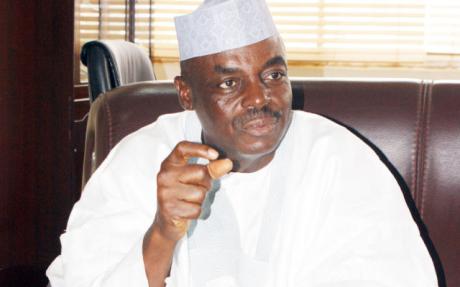
Olorogun Peter Igho is the doyen of Nigerian television production. He is regarded as a legend and trail blazer in Nigeria’s television and movie industry. He headed television production in the 80s and 90s, a period seen as the golden era of television in Nigeria.
His production of the drama series Cock Crow at Dawn was a watershed in television production. Through other productions like Things Fall Apart, Behind the Clouds, he nurtured the first set of modern television stars that form the backbone of what became Nollywood.
He spoke to Okorie Uguru on his life, television production, Nollywood and other issues. Excerpts:
My first observation is that your name seems older than you, looking at you physically.
At 75?
Yes. Maybe we should start from that. What is the secret to your youthfulness? There is no pot-belly and you don’t look 75.
Well, the truth of the matter is that first, I am very restless person, and can’t sit in one place for a long time. So, I move around. I mean if I go to a party, most of the time my friends would say I am too restless. I want to make sure everything is working. Maybe it is the producer in me that wants to make sure that everything is working well, even if it is not my party. With most of my friends, if I go to their party, no matter how small, I take over as MC and I go round to make sure everybody is eating, and everybody is okay. So, I am restless. But most importantly, I believe that he who rests, rusts. So, it is in everything I do, in the work I do, in the way I keep fit, and all that.
I also play golf four times a week, Tuesdays, Wednesdays, Thursdays and Saturdays. During the week I play nine holes. So, that way I keep fit. But most important also, it is not just the physical activities, but also meeting with people. When you are out there, you are breathing in fresh air, you’re meeting with people. That clears the cobwebs and all that. I believe that is practically why I am still moving when all my friends are practically walking with walking sticks. I thank God for that.
The name Peter Igho is legendary due to the role you played as a producer during probably the best period of television drama in Nigeria. Many refer to this period as the golden age spanning between the 80s and the early 90s. Did you plan it or was it by chance?
This question takes us way back because I was born in Jos, my father was a tin miner. Growing up in Jos helped to make me who I am. First we lived in various camps where my father was mining. But then when in Jos town, I recall that growing up, I attended St. Theresa’s Catholic Primary School, the compound in which we were staying, we were about eight families, we were the only none Igbos in that compound. So, I didn’t learn Igbo, I grow up speaking Igbo. And because in Jos, the language of communication was mostly Hausa in the market and all that, most of my teachers in primary school were also Igbos. Even today, when most people hear me speak Igbo, they wonder how manage. It was not from staying in the East but from Jos. Jos was so cosmopolitan at that time, so you grow up speaking your language… In fact, it was my language I learnt to speak, because most times, when our parents speak to us, we answered in Igbo or Hausa. They will say, common, we are talking to you and you are speaking another language, so they forced us to learn to speak our language (Urhobo).
Most importantly again, because the mining business was not very flourishing all the times, now you have it, now you don’t, the vicissitude of the mining thing affected our father’s financial standing. So, most of the time, when we came back from school, we helped to hawk whatsoever was in season, whether it was groundnuts, boiled eggs, and all the seasonal produce, the most common was the seasonal guinea fowl eggs. Those days, there were no chicken eggs. Chickens were available only when you have local chickens in your compound and they lay eggs. The eggs in the market that you bought were the guinea fowl eggs. My mother would buy them and we would go hawking them after school.
Because in Jos there were cinema houses, in the morning, afternoon and in the evenings, we invariably ended up at cinema. It was quite problematic because we got hooked up with the cinema. Even as young children, we understood, especially myself, the language of the movies. Even adults would pay for us sometimes when we don’t have the money, to enter and explain to them what was going because at that time, most of the films, part from the English films that were Tarzan series, Davy Crockett series, the others were Indian films. The Chinese films came later. And most of them were not with sub-titles, I understood enough of what was happening to be able to tell that the actor, this is this and that. So, at that early age, I understood the language of the movies in cinema and got hooked up to it.
Years later, when I went to secondary school my best subject was literature, I loved story telling a lot. My mother was an incredible story teller.
So, it is also inert?
Yes, that also helped because even now, at every opportunity my grandchildren would say tell us a story, and I love doing that.
So, it came from my father also, there was this Hausa book, Magana Jari Ce…
I know Magana Jari Ce by Abubakar Imam.
That was what I first read when I was in primary school. So, years later when I went to secondary school, I always won awards in literature and all that. I was the Kennedy Essay Competition winner in my school. So, it came in like that, interest in the movies, interest in the music and all that.
Even when I went to the university, I went to the University of Ibadan…
Theatre Arts?
You couldn’t major then. I was an English major, Theatre Arts used to be subsidiaries. I did Theatre Arts as a subsidiary. Even in my university, I and my friend set up a band. Again you see the restlessness. Of course because we were indigent, we would go hire equipment, perform for people.
Where you playing instrument or vocal?
I was the lead vocalist. Even in the secondary school in the band we had, I was the lead guitarist and the lead vocalist. In the university we had a guitarist and I was singing for the group. It was quite a band and it was launched at a big event. It was the first ever properly known band in the University of Ibadan. It was called the QMarks.
When I left the university, I was employed by the Federal Service Commission from the university as an education officer and I was posted to North West State. North West State, to Sokoto as an education officer. From there I was posted to Bida in the present Niger State. Again, restlessness took up again. All teachers will teach and go home and sleep, but I just couldn’t. Most of the students were matured students. It was a teachers’ college. They were always dodging from school. They didn’t take it too seriously. So, I approached the principal and said, “listen, can I do something with these students?” He said why not, that he was lost for what to do with them. So, I got them together into a drama group. Not many people were interested and it all boys. Before then, they had these little things that they do, boys would dress like girls and they will perform. I thought I could take it a little higher.
So, I went to the principal of the girls’ school in town. I said listen, I want to setup a drama group, but I don’t want boys acting as girls. I want girls to be girls. The principal said ‘God forbid! I wouldn’t allow my girls to mix with the boys’. I said, don’t forget that at the end of the day, it is you people who would separate them. They come from the same homes. It is when they get here that the boys and girls go to their different schools, but when they close, they go back to the same homes. What I am asking for is that let somebody lead to the hall straight, they perform and they go back. There will be no hanky panky and all that.
So, she thought about it and later, she called me and said that she mentioned it to the teachers and they were all very excited. So, they came with them. I had one of my students in class who was the son a famous Angale drummer. In Nupe land, they had these Angale drums, like a set of seven drums. An expert plays those seven drums. You can imagine. So, I asked him to get us a set and he did. One day we got to the hall, I told him just perform. Of course as he was performing all the other boys were rushing in to come and dance. I just allow them. They asked what are we doing, I said just dance. So, every day we go there, they play music and they just danced. So they started competing among themselves, I was watching them. Then they girls came. When the girls came everybody wanted to be part of it. But when the girls came, I allowed them to dance for three, four days, they just danced and go back. At the end of it all I wrote a dance drama titled Ugaga’s Heart. It was a dance drama that sought to pick you across many dangerous scenes. I realized that because of their level, you can’t begin to write long dramatic speeches. They were incredible dancers that could express themselves. So, I did it using Nupe music and dance as the basic structure for the story.
When we performed, the principal came to watch, and the words went round. We performed for the entire school, we performed for all the schools. Then words went round that we must perform for the entire town, we performed, even for the traditional ruler, the Etsu Nupe. Then the principal said this is too good, that we must travel round the state. So, she bought bus for us. We went to Minna, from Minna we went to Kaduna, from Kaduna we went to Gusau. By the time we were performing in Gusau, we got words that the governor has heard about it and wanted us to have a command performance. So, we went to Sokoto and had a command performance. When the governor saw, he said no, it shouldn’t stop there, that we must take this play to the National Festival of Arts and Culture, that was in 1974. It was the North West entry for that year.
When we got to Lagos, there were 12 states at that time. Three states won, including North West with Ugaga’s Heart. When I came back to Sokoto, it was a hero’s welcome.
At that time, because of so much money in culture, my brothers wanted me to stay and make money. Like I said, I led the entire North West drama contingent and there was so much money given to us as allowances. So, when we came back, about that time, from 1974 towards 75, North West was now setting up its own television. It was called NTV Sokoto. So, my brothers wanted me to stay in culture and make money, because of my interest in the moving image from the movies I have seen, I wanted to be part of that television experience, because that was the closest that will bring you to the cinema. I chose to go to television. My brothers said look, what is there? There is no money in television. In culture there is money, in television at best you have ‘written by’, ‘produced by,’ and ‘directed by,’ is that what we will eat? I said no. we argued and argued and my father had to step in. He told them ‘if that is what he wanted to do, leave him. After all, when he left the university, he went to teach.’ As at that time we had that argument and said I like imparting knowledge, I like talking to people. That was why I went to teach, for three years as an education officer. That gave me the confidence to stand before people, and also satisfy my desire to inculcate knowledge. So, I chose to go to television and my father said let him go there if that is what he wants. It will open more doors for him than even the riches you think was in culture. That was prophetic, because I don’t have the money, but like you said when you came in, my name opens more doors anywhere I go. So, this is my background and how I came into television.
Like I said, I was a pioneer staff of NTV Sokoto. We started doing plays. The studios were stores converted to studios with very low roofs. And there was not much proper lighting. Again, we had to improvise a number of things. That time, the cameras available were big cameras in the studios. At that time, there was no camera to be used to shoot outside. Only the film camera they used for collecting little, little clips for news. That was why at that time, drama series were all studio based-the Village Headmaster, Samanja, and Masquerade. So, there were efforts in Winds Against My Soul, For Better for Worse, all studio based programmes. So, we too started and I was in charge of Hausa and English language drama every week live. There were no recording facilities to record and go and edit. There was no margin for error. We had to rehearse and rehearse to make sure that we were meticulous in our planning. Then in 1977, the Nigerian Television Authority (NTA) came under one umbrella and NTV Sokoto became NTA.
So, it was the next year, 1978 that NTA wanted to showcase its oneness, before then we borrow some programmes like Village Headmaster to show. That why even though there was no network, we knew Village Headmaster, we knew Samanja, Masquerade and so on. They sent the tapes for variety.
Then when NTA came under one umbrella, to showcase their oneness, they organized a drama competition among the 12 NTA stations. I wrote and directed the entry from NTA Sokoto called Moments of Truth. To cut a long story short, when the plays were adjudicated, my play, Moment of Truth, came first. Because my play came first, next year, when NTA saw government endeavor in agriculture, and they saw how popular that drama competition was, so NTA decided to support government’s agricultural endeavor with drama series. Because I produced the winning entry during that competition, I was transferred from Sokoto to Lagos to go and work and produce these series that was to be produced to promote government’s endeavor in agriculture. That was what became Cock Crow at Dawn.
Despite being relocated to Lagos, For Cock Crow at Dawn, we saw you moving the set to Jos and bringing together some of the best actors in Nigeria then from different regions. Could you talk about the mindset for that because many will see the Cock Crow at Dawn as the real dawn of television drama series in the country and later expanded to Nollywood?
I was progressing with that story. When I was moved to Lagos to produced what became Cock Crow at Dawn, we had done something beyond winning that drama competition. Because part of what made us to win with Moment of Truth was the fact that in that production, unlike all the studio based dramas that we are used to seeing, suddenly, here was a production that took you out of the studio.
So, it was a pioneering effort?
I am reputed to have taken drama out of the studios to locations.
In Nigeria?
Yes. I told you our studios were not properly television studios. It was a converted warehouse. So, we had to improvise. While working in the confines of that studio, but having grown up in the cinemas where most of it were outdoors, I wanted to do the same.
So in terms of television technology and production, Nigeria was far behind?
Even worldwide, the mobile camera that became what we are using now, were still to come. It was still cine-camera where you had to shoot on film and process. Because it was so expensive, only the news people use a bit of it, two seconds, five seconds, one minute and incorporate as news insert. It was when I started in Sokoto that I started using their camera to go and shoot sequence outside and bring there, and incorporate into my own drama.
For the Moment of Truth I went far beyond that. Like one of the majors scenes in the play, a man who was capable of having g four wives, he had one who he loves and he was not going to marry more, but still didn’t have a child. But after many years of childlessness, she finally had as child. They were happy. But when she had the child she was told she was not going to have another because it was through caesarean. Both of them were still happy that at last after so many years God had blessed them with a son. While they were having this big party celebrating this child, the child became ill. They called family doctor to treat the child, but the child died. Now, how do you express the pains this kind of couple who had gone through so many years of childlessness, going through all kinds of abuses that in the Nigerian society they abuse a woman without a child? And she knows she will never have another child.
That time we never had professional actors, most of the actors you see, even in Village Headmaster, they were all working somewhere. From my own experience of watching these dramas, when I see people cry inside these dramas, they make you laugh instead. But I wanted people to cry with this woman. I wanted them to share her pain losing this child and was never going to be a mother again.
So the moment she screamed the baby was dead, I didn’t even show her, I just went straight to the outside of the house and there was a heavy storm, heavy rain lightening and thunder. Then we see the husband inside running around looking for his wife because he knows she is in pain. He can’t find her inside, then he comes outside looking for her. He finds her in the garden. The woman is just there in the rain and you can’t even tell her tears from the rain. So, he runs to her, picks her up and as he is taking her back, I put Bongos Ikwue’s music What’s Gonna be, Gonna be… And at that point, everybody breaks down . Now this was a sequence outside.
Some of the judges at that time asked me, you came from Sokoto, the play was shot during the dry season, even if it was in the rainy season, how could your camera crew be in the rain? And where did you get this storm from in Sokoto? What I did was to bring in creativity at that time. I went to the fire brigade and told them can I borrow your equipment, can you give me one hour? They asked what I was doing was a how on fire? I said no, just follow me.. I said put some your things here and when I give instruction, let the water fall on the house. And they did that. I what I needed to do after that was to get the sound effect of thunder. By the time I introduced that, when you saw that… Where were you when the rain was falling they asked? Of course we were on dry land. The rain was only on the house. So, that was one of the things that blew the people’s minds and of course the pains that were exhibited on that scene.
So that was a major departure, something that people had never seen before television in Nigeria.
So, when I came to Lagos for the project, I realized two things. I didn’t want something that will be a regional thing. I didn’t want it to be an Igbo, Hausa or Yoruba drama. I wanted a drama that Nigerians everywhere will identify with. So, even in the choice of the names. I was very careful in choice of the names. Even Bello, we said Bellos are in the North, Bellos are in the South. Then Gaga, Gaga is Urhobo, Ogaga. I have a cousin who is Gaga. Ene was one of my staff, Ene Oloja, she is Idoma, but Ene can come from anywhere. So, I took my time over those names.
Again, in choosing the actors, I said I have to be very sure that I get a team. I didn’t want too many of the old names. I wanted something fresh, but you needed to bring in one or two there were already established and all that. I mean I had to think about Kasimu Yaro (Uncle Gaga) the wicked uncle.
The late Kasimu Yaro I know very well was more into Hausa drama. How were you able to convert him to act in English? Himself and one or two others in the cast, how did you do that?
Well, the thing is that until you meet Gaga, you don’t know how versatile he was. Kasimu Yaro was in all the Karanbana series…
Including Magana Jari Ce…
Magana Jari Ce came later when I was incharge, but at this point I knew Kasimu Yaro from the Karanbana series during NTV Kaduna days when we were all exchanging programmes and all that. I knew that Kasimu Yaro was one of the most brilliant people that I have ever meet. Kasimu Yaro would sit you down here and tell you about flying a plane. And he will describe it you in a way that you will be amazed. He was such a versed mind that any topic you took, Kasimu will give you a breakdown of it.
So, I knew that he very rounded, a man who could visualize any role you gave him to do, even though he has been know more in the Hausa drama series, I knew that for the drama series, he would be one of the best. So, that was how I got Kasimu Yaro.
Bitrus, the late Sadiq Daba, was with me in Sokoto. He was the doctor in Moment of Truth. We worked together in Sokoto. So, when I was casting for the Bello family, I started with him. I now had to find somebody who looked like his father and somebody who looked like his mother. It actually started with him. It was easier with him.
In Jos, the guy who played Bello, George Menta is an Urhobo, but he also grew up in the North. His father was one of the richest tin miners. The moment you saw him, you saw Bitrus. The person that was difficult to find was Zamai, the wife of Bello and the mother of Bitrus and Larai. Larai was also with me in Sokoto for the Moment of Truth. She acted the wife who lost her baby. So, she and Sadiq who became brother and sister were with me in Sokoto. So, it was the father and mother that we had to get from outside.
Getting Zamai was difficult, it took a long time, but that is a long story. But we finally got her. The irony was that Larai the daughter, and Bitrus the son, were older than Zamai, Ene Oloja in real life. So, it became the sheer brilliance of Ene Oloja’s acting to be able to depict their mother and do it very well and convincingly. I took my time to get the cast.
Including Chika Okpalla…?
At one point, a number of producers were attached for training, to learn on the job. Chika Okpalla, Chief Zebrudaya, was one of them. Basically they were all there to learn production on location.
Cock Crow at Dawn became a kind of watershed in Nigerian television…
It is because Cock Crow at Dawn became such a humongous success because it broke grounds in many ways. It was the first ever drama series in this country shot entirely on location. Before then, everybody was under the safety and comfort of the studio. This was the first time we are exposing a whole series to working outside the studio, where you are fighting with nature, the elements and all that. You are exposed to the sun and weather, no air conditioner. It was difficult, it was painstaking, it was a very tough assignment. But again it paid off in the end because all the efforts we put into it made it a big success. It is the first ever series with its own dedicated equipment. Before all the studio programmes, when you want to go and shoot, you book for camera and so on. This one we had our own dedicated facilities. We commissioned music, Bongos Ikwue…
I have two questions here: The Cock Crow at dawn song, was it commissioned? Two, what do you have with Bongos Ikwue, we saw you using his music also for Moment of Truth (What Gonna be, Gonna Be)?
You know, the time I took to select the cast, the same time I also took to select the crew. Also, the same I also used to ensure that I got the right music. You mentioned Moment of Truth, growing up in Kaduna during my secondary school, I was a day student most of the time, from form One to form five, I became a boarder, only the last term of my fifth year. In those days, there was one voice you heard regularly on radio, that was Bongos Ikwue’s. So, all of us knew Bongos Ikwue. He had a group called the Rooftopers because he was performing at a place called Hamdala Hotel. So, they were called Bongos Ikwue and the Rooftopers. Outside that he was performing there, you will always hear his voice on radio alone singing and performing. We knew all his songs and all that. That was why when I was doing Moment of Truth in Sokoto and I needed the music that will help capture the emotions that I wanted, my mind went to him. Because Bongos Ikwue is a great story teller in his songs. He had also this voice that touch you and pull the strings of your heart.
So when this series came, and I knew I needed somebody who will give me the kind of song that I want, my mind of course went straight to Bongos Ikwue.
When I went to meet t him, I said we are coming up with a drama series and it is something different that nobody has seen the like of it before, and I want the music to also be unique. He asked what is the brief. I said you remember your song called Lagos? He said yes. To his surprise, I sang a bit of it to him there:
“Tonight I think of my home, the home where I was born
I think of my family…
There in my home, we had no sophistication
We had no taxis, the cock crow was all we had
To rise early as sun up, we all go to the farms
We driving monkeys away, from the maize farms
And the birds away from the rice farm… ”
That comparison was what I wanted to do. This series apart from promoting agriculture was to dissuade people from moving from the rural to the urban places into trouble ‘wahala’, where there is traffic jam, no jobs, no money to pay for accommodation. Instead of that, why don’t you go back home where you have calm? That was one of the purposes of Cock crow at Dawn, to dissuade rural-urban migration. Also to showcase threw rural side as the more positive one than the rough and tumble of the urban life.
So, having given him that brief, he asked what visuals we were using. Of course I was going to be using the sign of the cock. So, that helped him when he was talking about:
Here the traffic never jams
And there’s not much to buys some yams
And the neighbors say hello
You can even hear the sound
Of the cock crow at dawn.
We discussed and when he came up with it, it was a masterpiece.
When he finished and gave you the song, what was your impression?
With Bongos Ikwue, I have no doubt. First I had met a number of musicians and I knew many of them. Many of them, if you call them, like many Nigerians do, the first question would be, how much are you going to pay? Bongos Ikwue doesn’t even talk about money.
Are you saying before he started the job he never asked you how much you were going to pay?
No, no. All he needed to know was that what was it all about and why do you think that I can do it? For him the art was much more than the money you are going to pay. And, that was why he did what he did. He sought perfection. He went back and thought about it, and came up with something that was good.
We went beyond that and said, don’t just stop with the theme song, do other songs that we can make an album from. We launched it and it was called the Cock Crow Album. There were other songs that he had there that many people did not quite remember including ‘the Larry song’.
Everything that went into Cock Crow at dawn was properly planned and executed, nothing by accident.
Now why Jos, you asked that tangentially? Jos because I was born in Jos and I understood the terrain more than anywhere else. In fact, when they gave me the assignment, it was to do it in Lagos. And I said how do I shoot an agricultural programme in Lagos? First, to get your artistes from various locations to come to your set because of the traffic jam and all that, it will be hell on earth, and there would be no beauty to show. But I grew up in Jos, I was born in Jos. I knew the rolling hills, the beautiful waterfalls, and all the rest of them. So, going back to Jos was for me like voyage of rediscovery. I also had an incredible camera man.
Don’t forget, when we were going to start Cock Crow at Dawn, video camera for shooting outside had not come. It was that scenic camera, film camera that we had to use. And to shoot with that one, you had no editing facilities in Nigeria. We will shoot on film, and then send it to London for processing, then they will send a report to us to say it was okay; it was okay in terms of the technical quality of the film, not in the acting. I will not see them until I go to London. It was a complete departure from what drama was. We were not shooting on video. There were no video cameras for use outside the studio. That is why I say Cock Crow at Dawn broke all the records then in many ways; It was not just the first drama series shot entirely on location, but it shot 13 episodes entirely on films, celluloid. I have to paint this picture for you properly. At that time, the only people who used films, where the film units of the Ministry of Information. So, here we were now trying to use that same camera to shoot a drama series entirely on location. That had never been done. Even our rooms were not in studios, we rented houses like this and used them. This is what Nollywood learnt and used later.
Why were the 80s and 90s when you were in charge of the production of some of these iconic dramas a kind of bench mark up till today? This include in terms of storytelling, quality of production, the caliber of artistes. They did not just fade off with these programmes but were the fulcrum of what became Nollywood. Why was this period like the golden age?
It was indeed the golden age of broadcasting in Nigeria. There are so many reasons…
Because Cock Crow at Dawn wasn’t an isolated thing.
Let me give you a little background. It was a deliberate act. Up till the point when Cock Crow at Dawn came, stations had their budgets for the little dramas that they did, like Village Headmaster, Samanja, and so on. But the rest were all these cooking time, children’s time, and all those programmes. After the success of the drama competition of 1978 where Moment of Truth came first, NTA at the management level, decided that we will not have a big reputation if it continues with just everyday programming. There was a term they called it then: perishable programmes, programmes that you can wipe off: come and do cooking time. At cooking time, they cook Ogbono soup, Egusi soup, then in another one you Tuwo Da Miyan Kuka and all that, or Ofe Nsala and Onugbu soup and all that. Those are not high profile programming. So, NTA’s management decided at that time that every year, they would invest resources and facilities to produce at least one major programme that will stand the test of time. Don’t forget from that 1977 when NTA took over from the various stations’ little inputs, NTA wanted to show itself as the giant that it was, not only in name but also in the content that it produced. So, they started what they called programme projects. The first programme project was a documentary series shot by Eddie Iro. Before the drama competition of 1978, they had done a documentary competition and Soji Oyisan and Eddie Iro…, especially Soji Oyisan’s production, I think his programme won, and they decided to do a documentary series. They gave them a camera and I think they travelled to the Gambia, I think they did about four-five episodes and they couldn’t continue for so many reasons.
Cock Crow at Dawn was the project two. In those projects, NTA said they will now invest proper funding, proper facilities to ensure that the programmes go above others. So, Cock Crow at Dawn was the first drama series that we see its own dedicated equipment. I recall that when I was about to go, they gave me a cheque for N17,000 to but vehicles for Cock Crow. I bought two brand new station wagons and a saloon car at that time. We were running a station outside the station.
That seems like a prelude to movie villages?
It is. It was a movie village. We had our own set and all of that, and the miles we travelled to do what we were doing… In fact, at one point, the management including the director general came to see us, they couldn’t believe their eyes. We were in Jos, when we moved to the village, the village itself, Ungwan Teria was miles on the road to Zaria, you branch off, Burum, then you go to Ungwan Teria.
You know when Bello moved home, the compound where they were, where Uncle Gaga was? That compound was actually the compound of the chief of the village. The chief had worked with my father when my father was a miner in Jos. So, when I was looking for a place for the shooting, my father directed me to him. He was very gracious to us, he said my father was wonderful to him. He gave us the entire village to use. So, we had the entire village as our set. That was where we had Baba Asabe, Chika Okpala, Bekee and the rest of them. This was where their houses were.
And when you see Zamai with Larai pack their clothes, they are going to the stream to wash and they walk out of the shot, the stream is on the opposite direction on the road to Kafanchan. You go pass Jos, and down…
Why the choice?
Because that is where the waterfall is. We wanted to capture the stream against the background of that waterfall. The scenery for us was important. That was why today, even when we met the governor of Plateau State, he said he wanted to honour the cast and crew because they helped promote Jos, that rock you saw, all the falls, the Assop fall, we promoted it. All the beauty of Plateau State was promoted by Cock Crow at Dawn. And it is not by accident that later, film corporation followed to site its headquarters there.
All that choice of Jos came from the beauty that we had exposed in Cock Crow at dawn, followed by Behind the Clouds later and many telemovies we shot there. So, it became like the hub for production where you go if you wanted beauty and excellence.
Later, you ventured outside drama and produced this breakfast programme, AM Express…
I was coming to that. When I had shot about 78 episodes of Cock Crow at Dawn, I was then promoted to become General Manager and taken back to Lagos again. Now, to ensure that these quality programmes were coming, NTA had set up, apart from the director of programmes, now had National Television Production Centre (NTPC) to produce programmes for the network. Rather than before when we took programmes from the various stations for the network, the network was producing its own programme. And that was how Cock Crow at Dawn, Behind the Clouds, and so on. When I was brought back to Lagos after 78 episodes of Cock Crow at Dawn, I was made General Manager, National Production Centre in charge of network programmes. It wss when I took over in 1983 that we said okay, let us do for other programmes what we have done with drama, that is Cock Crow at Dawn, but we still left the camps. I opened camp in Jos, opened camp in Enugu, opened camp in Kaduna and in Lagos (Badagry).
In Badagry, that is where we did Mirror in the Sun, and New Village Headmaster. In Enugu, we did New Masquerade. When you hear the term New Village, Haedmaster, New Masquerade, New Samanja, this was now the time the network started producing them for the network. They took them from the states and the became network programmes. It was at that NTPC that we really exploded. We did the Bala Miller Show; we did many of those music shows. That was when we did the documentary series Giant in the Sun. That was when we took other programmes form the studios and brought them to the network. That was that period.
How did this period of growth influence what became Nollywood?
Of course with all these blossom, just about everybody who was…eh, if you recall, at that time, even before that time, if you were dancing in the street and somebody saw you, you will hear, ‘This boy you sabi dance, why you no go NTA?’ so, anybody who showed talent, was directed towards the NTA. So, NTA was the happening point where various talents existed, and even from that time of the local NTV stations, even when it became NTA, many of the stars were all NTA staff. Zebrudaya,that is Chika Okpala was a staff of NTA, Matt Dadzee was a staff of NTA, Ene Oloja, was a staff of the NTA, Sadiq Daba were all staff of the NTA. That’s where the talents were. Once you were good, they tell you go to NTA. That’s why most of the productions at that time: Village Headmaster, Samanja, Masquerade, Cock Crow at Dawn, Behind the Clouds, except for a few independent producers like when I brought in Lola Fani-Kayode to do Mirror in the Sun and all that, they were mostly NTA staff. That made two things possible: now because we are doing Cock Crow at Dawn, Ene Oloja, Sadiq Daba, Zainab Bitrus who was one of Uncle Gaga’s wives, and many of them, were all staff of the authority, even in the crew. That meant, if I, as Peter Igho, gave you call time, say ten o’clock to be on set, first I led by example, I was on set before everybody else, and I was always the last to leave. If you were not there at ten when I say be there at ten, two things are likely to happen- you not only might lose your position as an actor, you also might lose your job. So, you needed to be very careful and make sure that you are disciplined, because not just your part, but also your job was in jeopardy. So, for us who were the producers, that made things easier. There was a lot of truancy in the industry and if you didn’t hold your team well, you didn’t exert discipline yourself, you will find out that there would be a lot of indiscipline, and indiscipline on set means waste of money, because what you are supposed to shoot in two hours, it takes you a whole day, and you are feeding people, and people had come from different parts of the country. When you would be ready, the elements might not be ready for you. The rain would come, and then you delay, then the key person, Kasimu Yaro, may his soul rest in peace, might be wanted back in his office, and he had to go. You had to keep everybody there until he is free. You wasted resources for one week because of one person’s indiscipline. So, it was important that you yourself show that discipline and run a proper set. I think that was an important lesson that Cock Crow brought into that industry- the importance of discipline and proper management of resources.
Apart from that element that element, that you had your major cast and crew when you needed them, because you were employed by the NTA, you were not doing your job. Sadiq Daba was a presenter of news, he was now here. Because of that, when we pay them their fees, we don’t pay them as outsiders. The outsiders had nothing else but that. So, our staff get 50 per cent of what the outsiders get. So, NTA saved 50 per cent of that fee. So, it was a double benefit for NTA.
I have given you this background because what then happened, when all these wonderful programmes were coming up, every day of the week, we had a programme that was sponsored. Village Headmaster was sponsored. Behind the Clouds was sponsored. PZ Industry was there; Nigerian Breweries was there. UBA was there. They sponsored Cock Crow at Dawn and all that. Again, Cock Crow at Dawn broke new grounds in terms of major sponsorship on the network.
Then somebody went to Mexico and went and brought Mexican soap opera. But before they did that, they were very clever, they first came and said, from now on, what we were doing was unprofessional. That staff of NTA should no longer act in NTA drama; that if you want to act, then you should resign your job and come and be an actor. Now of course all the major programmes on air at that time…Dejumo Lewis was an NTA staff, Chika Okpala, I you remove Chika Okpala from Masquerade, do you still have Masquerade? Behind the Clouds the same thing, and all that. So, with that one directive, Village Headmaster went off air, Masquerade went off air, Behind the Clouds went off air…
Because of the directive?
Because they wanted to bring in this Mexican soap opera.
Was it deliberate to cripple local productions?
From later what we saw, it was clearly deliberate to cripple local productions. Whatever the desire was, we fought against it, we wrote against it, but it held. So, the key actors in Behind the Clouds, Matt Dadzie who was a staff, Ene Oloja who was a staff, Sadiq Daba who was a staff, and so, we had to suspend that.
In Village Headmaster we had to take Dejumo Lewis out who said he cannot resign, he wants to hold on to his job. So, we stopped Village Headmaster. Masquerade, Chika Okpala after a while, resigned from NTA to be able to produce it as an independent producer. But of course that was the beginning of the slide down of the golden era. That was when we had Mexican soap opera like The Rich Also Cry on the network. Before then, on the network, it was an unwritten rule that only locally produced programmes were on the network. But from that time on, we started seeing on the network, The Rich Also Cry and those their Mexican soaps. That was when the slide happened.
But of course years later, NTA picked up. Leading to your question: when all these programmes went off air, don’t forget that Nigerians were already used to so much drama, from Village Headmaster to Samanja. Like I said, we had a camp at Enugu and one of my producers, Chris Obi-Rapu was there. In Badagry, we had Ndanusa producing from Badagry and all that. And in kaduna, we had a team not only for Samanja but for Magana Jari Ce. We had a camp when we still had Kasimu Yaro and all the rest participating and all that.
But Nigerians were already used to these programmes. Long time ago, we created in Nigeria, so they love our own programmes, and we could tell our own stories. Most of these actors who were part of the cast of these programmess, suddenly there was this vacuum. That was when one brilliant young man, Ken Nnebue, went and said, look Nigerians are used to this thing oh, we cannot let it go like that, why don’t we produce something, maybe not like NTA, but something we can put on VHS?
Now, I jumped one key element. You know I told you when Cock Crow at Dawn came and we shot the first 13 episodes, we shot on films which were taken to London because there were no video cameras. It was when we shot the first 13 episodes, imagine that, we will shoot on films, we send to London to be processed, then I will go later, look at the processing, then I will edit, then they will do the negative cutting and all that, then they print and then send to us. That was when Nigerians would see them. When I finish shooting, when everybody else would be resting, I was still working in London. As soon as the finish, I am back again to site, and I am working again. So, for me it was tedious and all that, but also for NTA, it was very expensive. So, towards the end of the 13th episode, the director general, a great man, Engineer Maduka, invited me and my camera man. He didn’t treat us like say take it or leave it. He told us say look, this film thing is very expensive, but that they had come up with a new camera, what they called ENG cameras, which is video, that you could use to shoot for longer period outside. So, they sent two of us to London to go and see a team using that. We were the first to go out there and see this camera that you can work with and see exactly what you are shooting. The advantage of course was immediate-you see what you’re shooting, and immediately you can edit. So, that was how the video camera came, and then others joined. I shot the 31st episode on films, but all the rest of the 78 was on video. The recording formats of course were different. Now with the coming of video, more can now work. It was cheaper.
So, by the time we were done when we were shooting all these other programmes on location, we were now using the video camera. So, by the time that this issue of no NTA actors came, the video camera was available to everybody. Chris Obi Rapu and Kenneth Nnebue now shot their Living in Bondage in Igbo and sell on VHS, and so many of the copycat Igbo traders joined the bandwagon. Nature abhors vacuum, they’ve seen us do this, they couldn’t just let it collapse.
Many of your actors that became popular during the era in question joined the bandwagon…
Even the crew, Chris Obi-Rapu, he directed that. He was my staff. He was still a staff at that time. So, it blew up then. NTA’s loss was Nollywood’s gain. So, that is the transition that came. Of course over the years, NTA shook itself up and has started coming up again.
Coming to the more recent one, when I was the general manager of NTA Enugu in 1997, I had a chance meeting with DIM Odumegwu Ojukwu. He said why don’t you do a documentary on the Nigerian civil war. We interviewed a 13-episode series called No Victor, No Vanquished. The of course Things Fall Apart. We short that on film again because we wanted higher value.
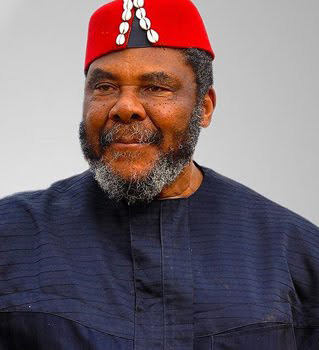
Pete Edochie was Okonkwo.
Yes, Pete Edochie was my senior in secondary school in St. John’s (Rimi College Kaduna). When I read the book (Things Fall Apart), I went to tell him, ‘look, I’m reading this book, you are the person I visualize as Okonkwo).
Why did you do that?
That is the story I am telling you. Like I said, Pete Edochie and myself went to St. John’s College Kaduna. He was two years ahead of me. When I was in form one, he was in form three. I knew him as my senior, and I have a lot of respect for him, very jovial and full of life. He had a special way of walking. So, when I read Things Fall Apart, as I read it, I was visualizing him as the Okonkwo in that story. So, I went him and said, ‘Sir, I have just finished reading this story. You are Okonkwo, you walk and talk like Okonkwo.’ He laughed. Years, later, when NTA decided to shoot Things Fall Apart, we brought a team together. We went to Enugu to select locations and all that, I knew who I wanted to be Okonkwo.
You told him this thing years before?
When we were in secondary school…
You told Pete Edochie that you read Things Fall Apart and you visualize him as Okonkwo, then close to 30 years later, when it was time to shoot…
When we were going to shoot Things Fall Apart, they got locations, I know went to Lagos, to get a few things together, before I returned, Ray had shot a number of clips with somebody from Benin as the Okonkwo. So, when I came back, I asked what is going on, they said they’ve started shooting. He wanted to impress me, and that they’ve gone to work. I said no, there can only be one person who can be Okonkwo. I drove straight to his house in Enugu. We speak Hausa when we talk.
Pete Edochie speaks Hausa?
Excellent Hausa. Don’t forget he is a Kaduna boy. I said ‘ranka yi dade, tashi akwai aiki (Boss get up there is work to do.). Remember I told you when we were younger that you are Okonkwo? So, the time has really come to be Okonkwo. We are shooting Things Fall Apart. That is how he got us dressed up and we went on set.
Finally, I know you are an Urhobo man, an Olorogun. It is difficult to place in terms of Nigeria’s geo-political region. You fluently speak Hausa, Igbo and Yoruba. How are able to project more of a Nigerian than projecting any geopolitical zone of the country?
You see, it is not by accident that I always go back to Jos in everything I talk about. Even when I was asked to produce Cock Crow at Dawn, I chose Jos. This is because Jos was a great cosmopolitan town and we all grew up as one, that our generation that were born there. The issue of Hausa, Igbo, Yoruba, Christian or Muslim was never ever in the thought process of any of us.
When years later I went to school at St. John’s College Kaduna and there were a few of us who came from Jos, if you touch anyone of us, you are in trouble. We all gathered together to fight that person. We had a Jos mentality. If you recall at that time, even in the football teams that were then, from Mighty Jets of Jos as the Garuba Okoyes, the Atuegbu brothers, Samaila Mambo, the Segun Odegbamis who came from who came from that background of Jos, we were one family. We grew up as one.
Again back home, my father brought us up not to discriminate against anybody. My father had Urhobo wife, he had a Fulani wife. He had Igbo and Plateau wife too. Growing up, many of our sisters married Muslim husbands. We grew up in a multi-lingual and multi-religious environment. That is my attitude to life.
During sallah in those days, we did all the dancing around and all the yawon sallah (sallah visit to friends and relatives). Jos was where I saw Igbo masquerades like Ukataka, Ulaga and so on. It was rich in culture. When it was the Igbo people that came with mmanwu (masquerades), we dance along with them. We were happy to be one. I don’t know where all these killings later came from.
Yesterday, I got a call from a friend. He said your brother is here. I said who? It was Segun Odegbami (former captain of the Super Eagles), we are from Jos. I played golf some three weeks ago with the former Inspector General of Police, Ehindero. He was also from Jos like me. Jos gave us this national character.
When I went to the University of Ibadan, many people found it difficult to understand where I was from because many of my friends were from kaduna days and Jos. When we discuss, we spoke in Hausa. Then they will see me with my Igbo friends and I will be speaking Igbo with them, not just one dialect of Igbo, at least two or three dialects. So, that was how we grew up, all from Jos.
Years later, when I was posted to Enugu as General Manager NTA Enugu, for six months nobody knew I could speak Igbo because most of my friends coming to see me where from the North, we spoke Hausa. So, they were in shock when Zebrudaya (Chika Okpala) came to see me and complained in Igbo that I came to Enugu and I did not inform him. Thy were saying look at this joker, always doing comedy, how can you speak Igbo to this Hausa man. He told them this person will sell you in Igbo. I have now Muslim in-laws, we are the richer for it. So, this is the background from which I came. I keep praying that we will get to the point when where you come from doesn’t matter, it is your character and ability that matters.
Do you feel fulfill that one of your children took after you and you were honour on the same day with your son?
It is a thing of joy that when you grow up, you keep praying that our children will be like us or better. So, on that day, if you go through my speech, I said I was happy our children are doing so well. I didn’t mean just my own son, the Nollywood children, the Kannywood children, those who grew up imitating what we have done, for them, we are the role model that they emulated. Nothing gives more joy than seeing them succeed, and they still remember that we contributed a bit. I definitely feel fulfilled that Nollywood has grown by all leaps and bounds, and a lot of it came through individual efforts rather than government support. But now, government is really supporting them. I think it needs to be coordinated properly so that they don’t keep running back to the banks. The issue now is that most of the time, the support is coming from the banks, either the Central Bank, Bank of Industry and the rest of it (BoI). Maybe the film corporation should have a segment that funds productions. They understand the issues of programme and movie making, therefore will understand where delays can cause more money and they will do it better than the banks will do.
Now that you are planning to bring back Cock Crow at dawn, some of the actors are late, some are very old, some are retired, is it possible to recreate the programme to capture that nostalgic atmosphere and ambience that was Cock Crow at Dawn?
One of the most famous television programme running on television in the United Kingdom is coronation Street. It has been running from generations to generations. Children has grown up to be grandmother and they continue and all that, for over 70 years that series has been on. So, don’t forget we are dealing with fiction, every character, whether it is Zamai, Ene Oloja and all that, were creations that.
I recall a very funny incident, when we were shooting Cock Crow at Dawn, we were on the street walking, our bus was parked. Then we saw a bus carrying children, apparently they were on excursion. So, when they saw Cock Crow at Dawn, they stopped the bus and ran out. They ran to Sadiq Daba, some ran to Uncle Gaga, some ran to bello, some ran to Zamai. Nobody came to me. I sat there watching as all the stars were being mobbed. At the end, one of the young girls who had finished with the stars now asked, where is the producer, Peter Igho, and they pointed at me. So, as she was walking to me, I said thank God, one recognition. So, she came to me and said sir, I just have one question for you. I asked what was the question. She said are you not jealous that people you created are known, nobody knows you. I said no, on the contrary it gives me a lot of pleasure to say that these people that I created are now stars. If nobody went to them, people rejected them, then I will feel bad. So, in the same vein, we came up with those characters, fortunately, we are talking about generations now. You just mentioned my son who is the next generation and as we planned it, I will be the executive producer, and himself and other younger elements, would handle the actual production, using more modern technology and state of the art equipment that we have on ground, but most importantly, we are brainstorming already, bringing in writers. Some of the old writers like Lilian Akime, Ene Oloja are still there. Ene Oloja was not just an actress, she is a brilliant writer. With the younger script writers, we are now bringing all together. The older once would produce that nostalgic link while the younger ones will bring in things that will appeal to the younger elements and the rest of them. So, at the end of the day, it is a win-win situation.