
Prof. Babalola: Why I accepted to head National Committee on Industry Professional Bodies Recognition and Governance
Posted on: July 30, 2026, by : uguru okorie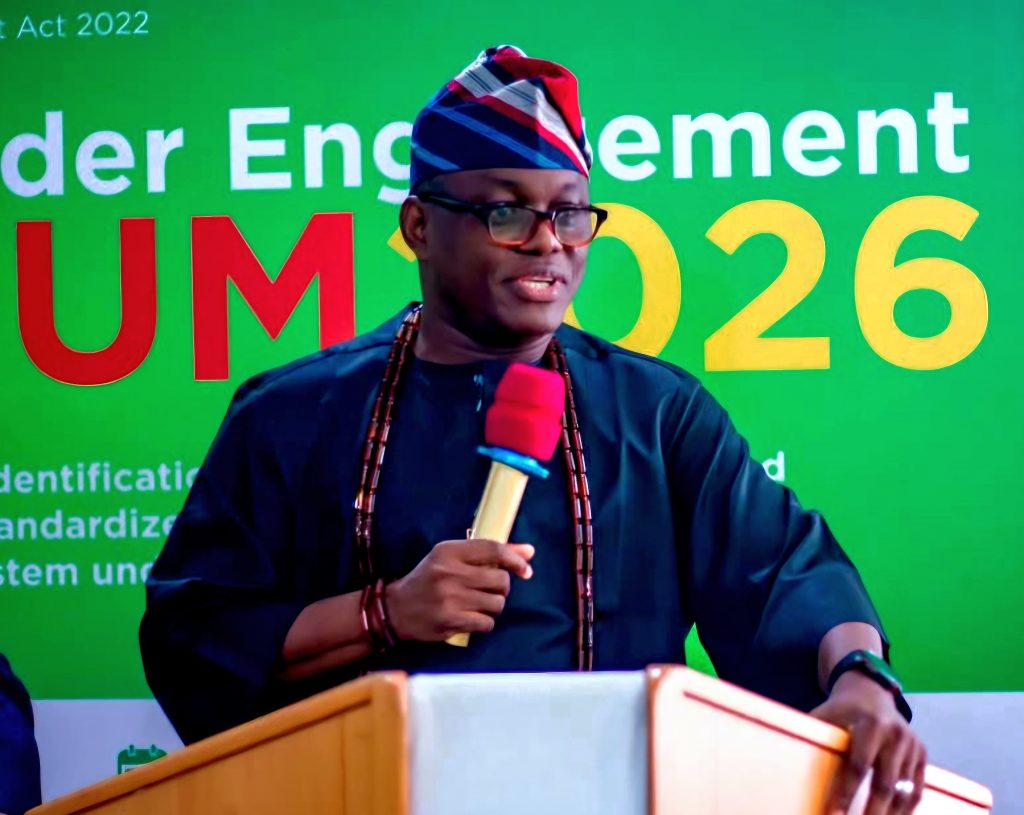
Professor Wasiu A. Babalola is a distinguished academic, legal practitioner, hospitality and tourism professional, and corporate governance expert whose career spans academia, law, hospitality, tourism, finance, forensic accounting and audit, taxation and culinary arts, to mention but few. His multi-disciplinary expertise reflects a rare combination of scholarship,
industry leadership, and professional excellence. A Professor of Hospitality and Tourism Management, he also holds qualifications in Law, Accounting, Business Management, Human Resources and Hospitality Management; making him one of the few professionals to successfully bridge academia with practice across multiple disciplines.
Prior to his current appointment, he serves as the Chairperson of the National Technical / Mirror Committee on Tourism and Related Services, while also providing strategic leadership to several national and international professional organizations within the hospitality and tourism sector.
Beyond the classroom and boardroom, Professor Babalola is an accomplished hospitality executive, legal practitioner, chartered accountant, certified executive chef, and service excellence advocate. His work continues to influence policy development, professional standards, governance reforms, and capacity building within Nigeria’s hospitality and
tourism industry.
Driven by a commitment to excellence, integrity, and lifelong learning, Professor Babalola remains dedicated to mentoring future professionals and advancing global best practices across every field in which he serves.
Herein below, Professor Babalola shares his experiences about the industry and his recent appointment to serve as Chairman of the National Committee on Industry Professional Bodies Recognition and Governance (NCIPBRG):
Prof., you have numerous academic, professional, and industry commitments. What convinced you to accept the responsibility of chairing this Committee, and what does this appointment mean to you personally?
Thank you for the question. This appointment is not a personal achievement; rather, it is a call to national service at a defining moment in the evolution of our industry. It presents a unique opportunity to contribute meaningfully to the development of a professional, ethical, and globally competitive hospitality and tourism sector. Throughout my career, I have been privileged to serve in academia, industry, and professional institutions. Those experiences have given me a broad appreciation of the challenges facing our hospitality and tourism sector and the opportunities that lie ahead.
For decades, our industry has witnessed tremendous growth, yet challenges relating to the recognition of professional bodies, overlapping mandates, fragmented standards, and governance frameworks have continued to affect its development. Addressing these issues requires courage, collaboration, and a shared vision that places the collective interests of the industry above individual or institutional considerations. This Committee presents a rare opportunity to contribute to building a stronger governance framework for the industry. It is not about any individual or organisation; it is about creating a professional ecosystem that
promotes collaboration, accountability, ethical practice, and global competitiveness.
Personally, I regard this appointment as a responsibility to give back to an industry that has shaped my professional journey. I accepted because I believe that when one has the experience and the opportunity to contribute to national development, one should not shy away from that responsibility.Many stakeholders are still unclear about the Committee’s mandate.
Could you explain its objectives and what practical outcomes the industry should expect at the end of your assignment?
The Committee’s mandate is both strategic and forward-looking. Our responsibility is to examine the framework for the recognition and governance of professional bodies within Nigeria’s hospitality and tourism industry. We are expected to identify existing gaps, encourage collaboration among stakeholders, and recommend policies that strengthen professionalism, accountability, and institutional effectiveness.
We are not being constituted to create division or diminish the role of any existing professional bodies. On the contrary, our objective is to develop a framework that recognises the valuable contributions of professional institutions while encouraging coordination, adherence to standards, and alignment with national development goals.
At the conclusion of our work, stakeholders should expect practical recommendations that will enhance professional recognition, improve governance, reduce unnecessary overlaps, strengthen industry standards, and create greater confidence for practitioners, employers,
investors, and the public. Ultimately, we want to contribute to an industry that is better organised, more professional, and more competitive both nationally and internationally.
Nigeria’s hospitality and tourism industry has several professional associations with different interests and sometimes competing perspectives. How do you intend to ensure fairness and avoid favouring any particular organisation?
Fairness begins with the recognition that every legitimate stakeholder has something valuable to contribute. As Chairman, I have no personal agenda other than ensuring that the Committee delivers recommendations that serve the collective interests of the industry.
Every member of the Committee was appointed because of their expertise and experience, and I expect every viewpoint to receive equal consideration.
Our deliberations will be guided by evidence, objectivity, transparency, and consensus rather than institutional interests or personal preferences. Where differences of opinion arise, and they inevitably will, we shall encourage constructive dialogue and seek solutions that advance the common good.
I have also encouraged every Committee member to faithfully represent the legitimate interests of the professional constituency they know best. It is only when all perspectives are openly presented and critically examined that we can produce recommendations that genuinely reflect the aspirations of the wider industry. Our loyalty is not to any single organisation; our loyalty is to the sustainable growth and professional development of Nigeria’s hospitality and tourism sector.
Can stakeholders, including professional bodies, hotel operators, travel professionals, academia, and investors, expect to be consulted before the Committee submits its report to NIHOTOUR?
Absolutely. Stakeholder engagement is fundamental to the success and credibility of this assignment. A Committee of this nature cannot produce meaningful recommendations by relying solely on internal deliberations. The industry is diverse, and every major stakeholder group possesses unique experiences and perspectives that deserve to be heard.
We intend to engage widely with existing professional bodies, hotel owners and operators, travel professionals, tourism practitioners, academic institutions, training providers, investors, regulatory agencies, labour representatives, and other relevant stakeholders.
Our objective is to ensure that the Committee’s recommendations are informed by broad consultation, practical realities, and evidence-based analysis. We want stakeholders to see themselves reflected in the final report, not because every individual view will necessarily be adopted, but because every legitimate voice will have been given a fair opportunity to
contribute. At the end of this process, we hope to deliver recommendations that are not only technically sound but also enjoy broad industry support, thereby increasing the likelihood of successful implementation and long-term impact.
How will your recommendations improve professionalism while also creating an enabling environment that attracts investment and promotes sustainable growth in the hospitality and tourism industry?
Professionalism and investment are inseparable. Investors are naturally attracted to industries that demonstrate clear standards, credible institutions, ethical practices, and regulatory certainty. Where professional standards are weak or fragmented, investor confidence is diminished. Our objective is to recommend a governance framework that promotes competence, accountability, ethical conduct, and continuous professional development across the industry. At the same time, we recognise that regulation should enable growth rather than create unnecessary barriers.
We therefore intend to recommend measures that strengthen professional recognition while encouraging collaboration, transparency, and predictability. Such an environment benefits everyone. Professionals gain greater recognition and opportunities for career development, businesses operate within clearer governance structures, consumers receive better quality services, and investors have greater confidence in the stability and credibility of the industry.
Ultimately, a professionally regulated industry is not only more respected but also more attractive to domestic and international investment. That is one of the outcomes we hope to support through our recommendations.
One of the long-standing challenges in the industry is the proliferation of professional bodies and overlapping areas of practice. Will the Committee be looking at mechanisms for recognition, collaboration, and harmonisation?
Yes, that is one of the issues that naturally falls within the broader context of our assignment. The existence of multiple professional bodies is not, in itself, a problem. In many mature economies, different professional associations coexist successfully because their roles are clearly defined and there are established mechanisms for cooperation and mutual respect.
Our responsibility is not to determine which organisations should exist or to diminish the legitimate role of any professional body. Rather, we intend to examine how recognition, collaboration, coordination, and good governance can be strengthened in a manner that benefits the entire industry. Where there are overlaps, our approach will be to understand
the underlying causes, engage all affected stakeholders, and explore practical solutions that encourage synergy rather than unnecessary competition. We believe that professional diversity should become a source of strength instead of division. If we succeed in promoting greater collaboration and clearer governance, the entire industry will be stronger for it.
- As Chairman of this important national committee, what values and leadership philosophy will guide your deliberations and decision-making throughout the assignment?
My leadership philosophy shall be founded on four principles: integrity, inclusiveness, objectivity, and service. Integrity requires that our decisions be guided solely by what is in the best interest of the industry. Inclusiveness means ensuring that every stakeholder has a
fair opportunity to be heard, regardless of the size or influence of the organisation they represent. Objectivity demands that our recommendations be evidence-based, carefully researched, and informed by both national realities and international best practices. Finally, service reminds us that this Committee exists to serve the industry and the nation, not individual interests.
I also believe strongly in consensus-building. While consensus may not always mean unanimity, it requires genuine dialogue, mutual respect, and a willingness to seek common ground. As Chairman, my responsibility is to facilitate that process in a manner that
encourages trust, openness, and constructive engagement. I have every confidence in the distinguished members of this Committee, whose collective expertise and experience will enrich our deliberations and strengthen the quality of our recommendations. - Finally, what message would you like to send to hospitality and tourism professionals, operators, regulators, and the general public regarding the work of this Committee and the future of the industry?
My message is one of optimism, collaboration, and shared responsibility. The hospitality and tourism industry is one of Nigeria’s greatest opportunities for economic diversification, employment creation, cultural promotion, and sustainable national development. To realise that potential, we must build institutions that are credible, inclusive, and capable of supporting long-term growth.
I therefore encourage all stakeholders to view this Committee not as an exercise in regulation alone, but as an opportunity to shape the future of our industry together. We welcome constructive ideas, informed contributions, and active participation throughout this
process. I also want to assure the industry that this Committee will approach its assignment with independence, fairness, and professionalism. We are committed to listening before recommending, consulting before concluding, and building consensus wherever possible.
At the end of our assignment, our success will not be measured simply by the report we submit to the country via NIHOTOUR, rather, it will be measured by whether our recommendations help create a more united, professionally respected, investor-friendly, and
globally competitive hospitality and tourism industry.
This is a defining moment for our profession. I invite every stakeholder to join us in building an industry that future generations of Nigerians will be proud to inherit. Together, we can strengthen not only our institutions but also Nigeria’s reputation as a leading hospitality and tourism destination in Africa and beyond.